
For further information, please send us an email at info@easternserenity.com or call 800.641.0137.
Antique Repousse Silver
Repousse is a technique used in metal sculpture to create images without changing much of the metal sheet thickness. Essentially, the metal is pushed and pulled from the opposite side creating a three-dimensional looking sculpture known as relief which doesn’t alter the weight or the density of the surface steel. Silver repousse is one of the oldest craftsmanship in South East Asia serving as yet another significant symbol which captures the essence of this unique Eastern region. Originally used as silver keepsake boxes for betel nuts, these antiques slowly turned into silver snuff boxes, trinket boxes, and even served as collectables and house decors. Sterling silver consists of 92.5 percent of silver and 7.5 percent of copper. The alloy is strong and flexible. Therefore, it is a valuable component used for decor and jewelry.
THE HISTORY OF BURMESE REPOUSSE
In the past, Burma was one of the wealthiest and most thriving empires in the region and with wealth comes a fair share of culturally significant art forms. This, of course, includes metal works as well. People of the privileged used sliver for betel-nut boxes and stands. These silverworks are delicately crafted with great care by the hands of the most skilled artisans. In the late 19th century, Burmese repousse gained recognition among Europeans and became something of a sensation for collectors.
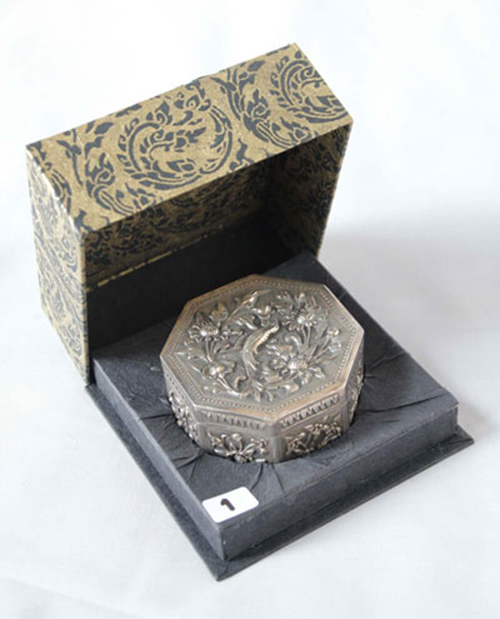
An octagonal sterling silver storage box embossed in alluring patterns of flowers with a bird at the center
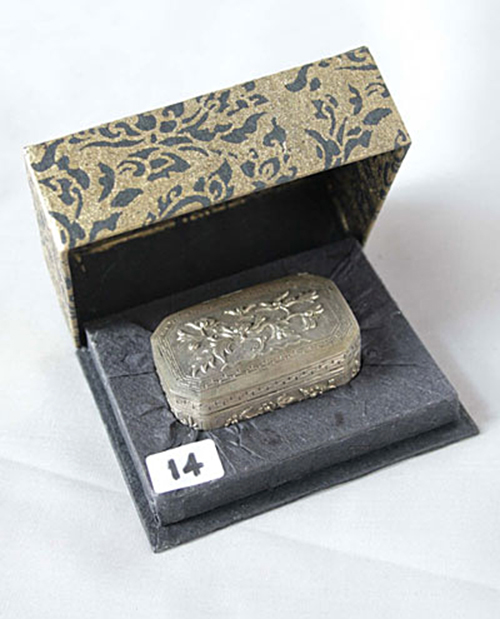
A sterling silver storage box in a fancy rectangular shape with images of flowers
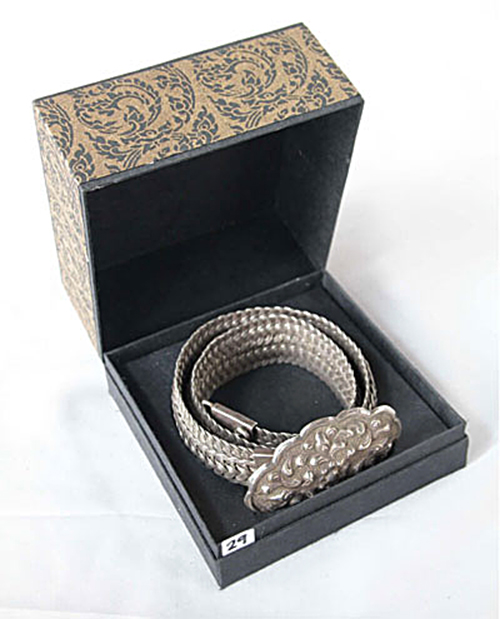
women’s silver belt designed with the traditional Asian vibe in dazzling oriental patterns
BETEL NUT BOXES
Silver repousse was also used for betel nut boxes in South East Asia since the people of the region had developed a custom of chewing betel nuts the same way modern day people chew gums. After the effect of westernization, the tradition was deemed uncivilized and marked illegal in Thailand since the end the Second World War. In fact, people who chewed betel nuts appeared unhygienic because it blackened their teeth and had similar effects to drugs such as cocaine. Although betel nut chewing has almost become a thing of the past, the same cannot be said for its elaborately designed silver boxes.

Burmese antiques consist of boxes, bowls, and belts
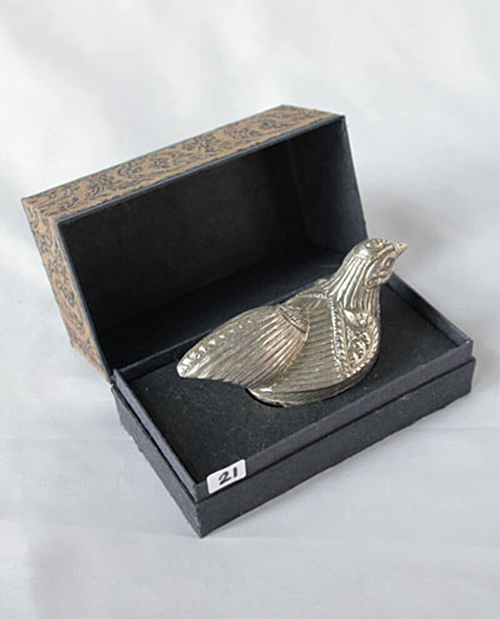
A betel nut box in the shape of a chicken to represent peace and the end of all conflicts
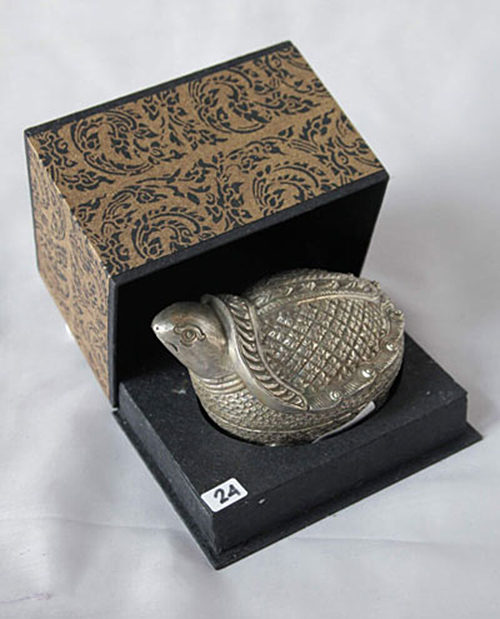
A stylisticly designed snuff box in the form of a turtle which represents prosperity and longivity
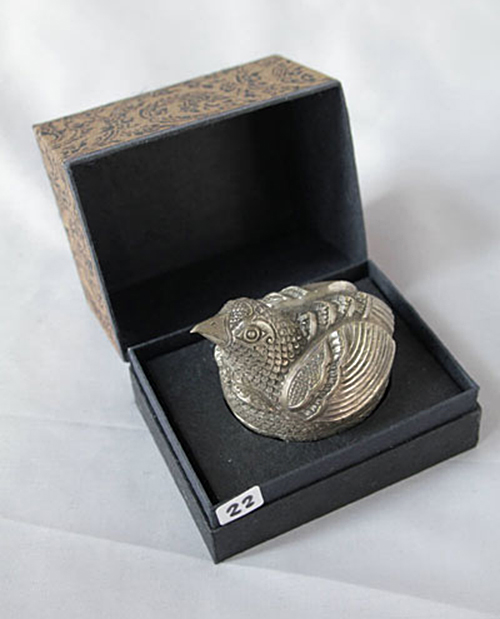
A bird-shaped silver snuff box archieved by means of repousse. A bird universally symbolizes freedom.